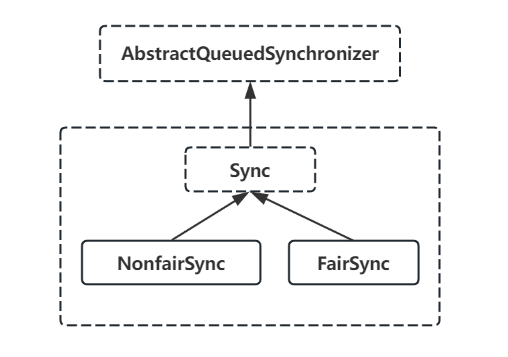
1. Semaphore 类结构 Semaphore 的类结构与ReentrantLock 的类结构相同,类内部总共存在Sync、NonfairSync、FairSync三个静态内部类。Sync类继承AbstactQueuedSynchronizer。NotfairSync和FairSync继承Sync。
1.1. Semaphore 类方法 1 2 3 4 5 6 7 8 9 10 11 12 13 14 15 16 17 18 19 20 21 22 23 24 25 26 27 28 29 30 31 32 33 34 35 36 37 38 39 40 41 42 43 44 45 46 47 48 49 50 51 52 53 54 55 public class Semaphore implements java .io.Serializable {public Semaphore (int permits ) {new NonfairSync (permits );public Semaphore (int permits , boolean fair) {new FairSync (permits ) : new NonfairSync (permits );public void acquire () throws InterruptedException {1 );public void acquireUninterruptibly () {1 );public boolean tryAcquire () {return sync.nonfairTryAcquireShared(1 ) >= 0 ;public boolean tryAcquire (long timeout, TimeUnit unit) throws InterruptedException {return sync.tryAcquireSharedNanos(1 , unit.toNanos(timeout));public void release () {1 );public int availablePermits () {return sync.getPermits();public int drainPermits () {return sync.drainPermits();public boolean isFair () {return sync instanceof FairSync;public final boolean hasQueuedThreads () {return sync.hasQueuedThreads();public final int getQueueLength () {return sync.getQueueLength();protected Collection<Thread> getQueuedThreads () {return sync.getQueuedThreads();
1.2. Sync 内部类 1 2 3 4 5 6 7 8 9 10 11 12 13 14 15 16 17 18 19 20 21 22 23 24 25 26 27 28 29 30 31 32 33 34 35 36 37 38 39 40 41 42 43 44 45 46 47 48 49 50 51 52 53 54 55 56 57 58 59 60 61 62 abstract static class Sync extends AbstractQueuedSynchronizer {private static final long serialVersionUID = 1192457210091910933L ;int permits ) {permits );final int getPermits () {return getState();final int nonfairTryAcquireShared (int acquires) {for (;;) {int available = getState();int remaining = available - acquires;if (remaining < 0 ||return remaining;protected final boolean tryReleaseShared (int releases) {for (;;) {int current = getState();int next = current + releases;if (next < current) throw new Error ("Maximum permit count exceeded" );if (compareAndSetState(current, next))return true ;final void reducePermits (int reductions) {for (;;) {int current = getState();int next = current - reductions;if (next > current) throw new Error ("Permit count underflow" );if (compareAndSetState(current, next))return ;final int drainPermits () {for (;;) {int current = getState();if (current == 0 || compareAndSetState(current, 0 ))return current;
方法
作用
Sync(int permits)
构造器,接受一个参数 permits,并通过 setState(permits) 将内部状态设置为指定的许可数量。
getPermits()
返回当前的许可数量,即当前同步器的状态。
nonfairTryAcquireShared(int acquires)
尝试以非公平的方式获取共享许可。它通过不断循环,尝试减少可用许可的数量,直到成功获取所需的许可或者无法获取为止
tryReleaseShared(int releases)
尝试释放共享许可。它通过不断循环,尝试增加可用许可的数量,直到成功释放指定数量的许可。
reducePermits(int reductions)
用于减少许可的数量。它通过不断循环,尝试减少当前许可的数量。
drainPermits()
用于一次性获取所有的许可。它通过不断循环,将当前许可的数量设置为零,然后返回原先的许可数量。
1.3. NonfairSync 内部类 1 2 3 4 5 6 7 8 9 10 11 12 static final class NonfairSync extends Sync {private static final long serialVersionUID = -2694183684443567898L ;int permits ) {super (permits );protected int tryAcquireShared (int acquires) {return nonfairTryAcquireShared(acquires);
1.4. FairSync 1 2 3 4 5 6 7 8 9 10 11 12 13 14 15 16 17 18 19 20 21 22 23 24 25 static final class FairSync extends Sync {private static final long serialVersionUID = 2014338818796000944L ;int permits ) {super (permits );protected int tryAcquireShared (int acquires) {for (;;) {if (hasQueuedPredecessors())return -1 ;int available = getState();int remaining = available - acquires;if (remaining < 0 ||return remaining;
2. Semaphore 示例 1 2 3 4 5 6 7 8 9 10 11 12 13 14 15 16 17 18 19 20 21 22 23 24 25 26 27 28 29 30 31 32 33 34 35 public class SemaphoreExample {private static final int MAX_AVAILABLE_PERMITS = 3 ;private static final Semaphore semaphore = new Semaphore (MAX_AVAILABLE_PERMITS);public static void main (String[] args) {for (int i = 0 ; i < 6 ; i++) {new Thread (new Task ("Thread - " + i)).start();static class Task implements Runnable {private final String name;public Task (String name) {this .name = name;@Override public void run () {try {" acquired the permit" );1000 );catch (InterruptedException e){finally {" released the permit" );
1 2 3 4 5 6 7 8 9 10 11 12 13 14 Connected to the target VM, address: '127.0.0.1:62443' , transport: 'socket' 1 acquired the permit2 acquired the permit0 acquired the permit1 released the permit3 acquired the permit2 released the permit0 released the permit4 acquired the permit5 acquired the permit3 released the permit4 released the permit5 released the permit'127.0.0.1:62443' , transport: 'socket'
3. Semaphore核心函数解析
以下给出Semaphore核心函数acquire和release,为函数的大致调用,可能与具体调用有些差别。
3.1. acquire方法执行顺序(大致调用图) graph TB;
A(Semaphore : acquire) --> B(AQS : acquireSharedInterruptibly)
B--> C(Semaphore : NonfairSync : tryAcquireShared)
C --> D(Semaphore : Sync :nonfairTryAcquireShared)
D--> F(tryAcquireShared方法返回小于0 执行AQS : doAcquireSharedInterruptibly)
F --> G(AQS : tryAcquireShared)
G --> H(AQS : setHeadAndPropagate )
H --> I(AQS : doReleaseShared)
3.2. release方法执行顺序(大致调用图) graph TB;
A(Semaphore : release) --> B(AQS : releaseShared)
B--> C(Semaphore : Sync : tryReleaseShared)
C --> D(AQS : doReleaseShared)
D--> F(AQS : unparkSuccessor)
4. ReentrantLock和Semaphare的对比 4.1. 共同 同步机制:都是基于AQS实现的多线程同步工具,旨在协调和控制多线程对共享资源的访问。
可用于资源:两者都可以用于控制对临界区或者资源的访问,防止多个线程同时访问或修改共享资源。
4.2. 区别 Lock类型:
ReentrantLock 是一种独占锁(Exclusive Lock),一个线程获取了锁之后,其他线程必须等待该线程释放锁。Semaphore 是一种信号量,它可以是独占锁也可以是共享锁。通过设置许可数,Semaphore 控制对共享资源的访问。
获取方式:
ReentrantLock 提供了显式的 lock() 和 unlock() 方法,线程需要手动获取和释放锁。Semaphore 使用 acquire() 和 release() 方法来获取和释放许可。线程需要通过 acquire() 获取许可,通过 release() 释放许可。
许可数量:
ReentrantLock 只允许一个线程同时持有锁。Semaphore 允许多个线程同时访问临界区,但许可的数量可以被限制,控制同时访问的线程数量。
可中断性:
ReentrantLock 提供了可中断的锁获取方式,可以使用 lockInterruptibly() 方法。Semaphore 的 acquire() 方法也支持可中断。
条件等待:
ReentrantLock 提供了 Condition 条件对象,可以通过 newCondition() 方法创建,使线程能够以一种有序的方式等待。Semaphore 不直接支持条件等待。